
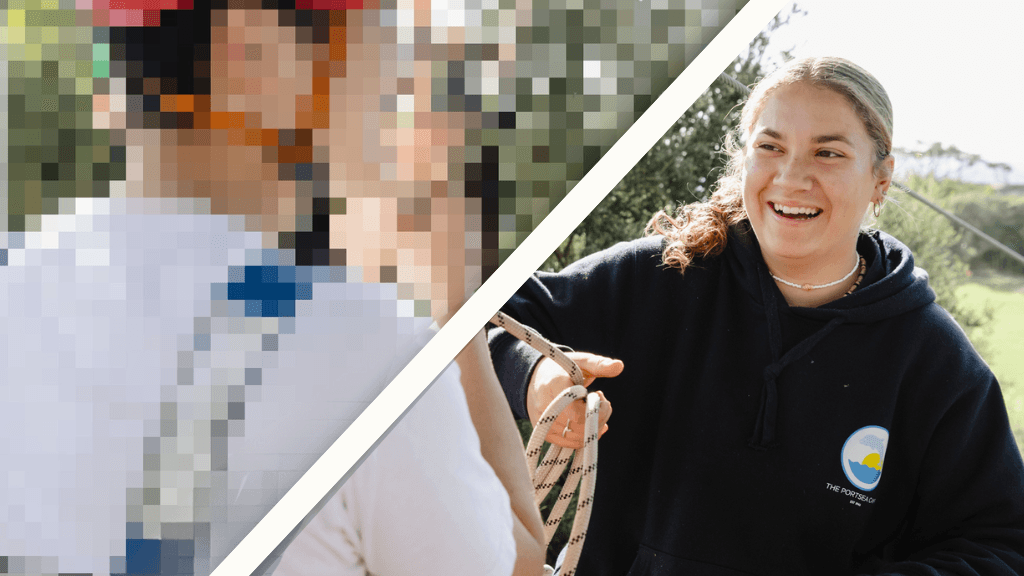
AI-generated content children are now exposed to is reshaping how they understand reality, identity, and even what is real. In the marketing world, there is already a term for this emerging shift: Fake UGC—user-generated content that isn’t created by a real user at all, but entirely produced by AI. These hyper-realistic videos of “people” unboxing or using products can be generated in seconds, blurring the line between authentic human experience and synthetic performance.
For adults, this technology is often framed as a productivity tool. But for children growing up in an environment saturated with AI-generated content, the impact is far more complex. For children, it creates a psychological minefield where the human experience is no longer the reference point.
We are currently witnessing the results of the first generation to grow up entirely on social media. The data is no longer speculative. Longitudinal research and recent meta-analyses has consistently linked high “problematic social media use” to increased rates of depression, anxiety, and sleep deprivation in Gen Z and Gen Alpha (Adolescent Brain Cognitive Development [ABCD] Study, 2024).
But as AI becomes the primary architect of the “content” our children consume, we are moving from curated reality to synthesized reality. This is not just a digital shift; it is a mental health compounding event.
The Illusion of “Safe” Spaces
Many parents find comfort in “safe” alternatives like Messenger. The logic is simple: it is just for friends and family, and there is no feed. However, “friends-only” apps are rarely data-neutral. Even in private messaging environments, platforms collect behavioral data, such as the time of day your child is active, who they interact with most, and how long they stay online. Because these apps exist in a broader ecosystem, this information quietly builds a persistent digital profile.
By the time a child is old enough for a full social media account, the algorithm doesn’t start from scratch. It already has a roadmap of their habits. When they finally open that first Instagram or TikTok account, they aren’t met with a blank slate. Instead, they are instantly met with an intensely optimised feed designed to capture their attention by feeding into the exact interests and vulnerabilities they have telegraphed for years.
The Shattering of Self-Image
We are already seeing the “AI effect” in the real world. Hairdressers and aesthetic surgeons report a surge in clients bringing in AI-generated “inspo” images: faces and hair textures that physically cannot exist in nature.
When a child’s feed is populated by influencers who are actually pixels, the bar for “normal” is moved beyond human reach.
- Materialism: Kids feel the pressure to keep up with lifestyles that require zero overhead to produce.
- Body Image: AI doesn’t have pores, scars, or bad angles. It offers a “perfection” that makes even the most filtered human look flawed.
- The Compounding Effect: If social media damaged mental health by comparing our “behind-the-scenes” to someone else’s “highlight reel,” AI creates a world where there is no “behind-the-scenes” at all.
Grounding Our Children in the Real
In a world that is becoming increasingly artificial, the most radical thing we can do for our children is to keep them grounded. In child psychology, “grounding” refers to techniques that pull a person away from anxiety or “head-space” and back into the physical world and the present moment (Grounded Theory, 2023).
To protect the next generation, we must shift our focus from restriction to resilience.
- The “Who and Why” Strategy: We must teach children to ask two questions of every image: Who made this? and What are they trying to make me feel? Developing this critical internal firewall is more effective than any external filter.
- Prioritise Sensory Reality: Children need tactile wins. Whether it’s sports, gardening, or building something with their hands, they need evidence of their own agency in a world that doesn’t require a screen to exist.
- The “Human Benchmark”: Foster environments where they see real people in real places. They need to see faces that move, skin that has texture, and lives that are messy.
We may use AI as an assistant in our professional lives, but we must never let it become the sole source of truth for our children. Our goal is to give them the self-belief to look at a pixel-perfect world and choose the beautiful, flawed reality instead.
Real People in Real Places
We are deeply committed to responding to this shift through our own programs. We believe the antidote to a synthesised world is genuine human connection and outdoor experience.
Our programs are designed to get children outdoors, in real places with real people.
By prioritising these tangible, face-to-face experiences, we help children build the tools, strategies, and self-belief they need to navigate the digital world. We want them to have the confidence to not blindly believe everything they see, but instead to value the complexity and beauty of real life.
Because the world is still, and always will be, real.


